


Most businesses do not have a lead problem. They have a follow-through problem. The ads run, the referrals come, the form gets filled, and then the lead lands in an inbox or a spreadsheet and waits. By the time anyone gets to it, the moment has passed. You did the hard part, earning the interest, and lost the deal in the handoff.
The leak is quiet, which is why it is expensive
A lost lead almost never complains. It does not send an angry email or ask for a refund. It just goes quiet, buys from whoever replied first, and never tells you why. Because nothing breaks loudly, the leak is easy to miss and easy to blame on the market. The truth is usually simpler: the lead was fine, the process dropped it.

Where leads slip out
The same few gaps account for most of the loss. None of them look serious on their own. Together they quietly drain the top of your funnel.
- The first reply is too slow. Interest has a short shelf life. A lead who hears back in minutes feels attended to; the same lead a day later has already moved on or forgotten you. Speed is not a nicety here, it is the difference between a conversation and a dead end.
- The follow-up never happens. Most deals need several touches, but the second, third, and fourth rarely get sent. Someone means to, then a busier day arrives. Follow-up sequences remove the "someone means to" by sending the cadence for you, so a lead never goes cold because a person simply forgot.
- The details are scattered. When the email is in one inbox, the note is in a chat, and the status is in someone's head, no one can see where a lead actually stands. Work gets duplicated, or skipped because everyone assumes someone else has it. Keeping every contact and its history in one place is what makes a fast, confident reply possible.
- No one owns it. A lead that belongs to everyone belongs to no one. Without a clear owner, it sits in the shared pile waiting for a volunteer who never comes.
- There is no defined next step. Even a well-liked lead stalls when nobody has decided what happens next. "Follow up sometime" is not a step. A dated, assigned action is.
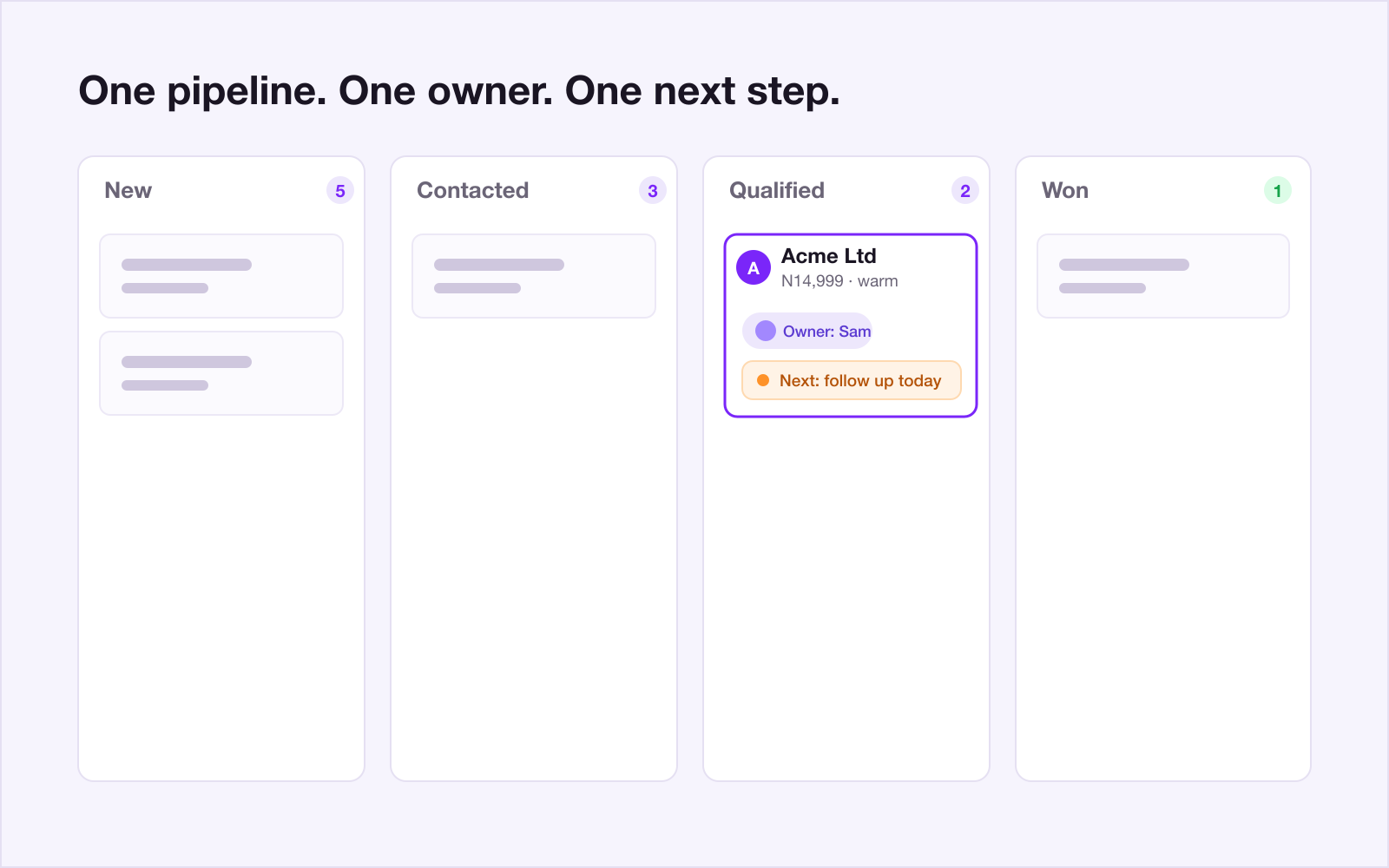
You rarely lose a lead because it was bad. You lose it because nobody replied in time, nobody followed up, and nobody owned the next step.
What a process that keeps leads looks like
A process that holds onto leads is not complicated. It just refuses to rely on memory. Every lead lands somewhere it can be seen, gets an owner, and moves through steps that are visible to everyone.
- One place every lead lands. New leads flow into a single system instead of a dozen inboxes, so nothing waits in a corner nobody checks.
- An owner from the start. Each lead is assigned to a person, so responsibility is never ambiguous and follow-up is never optional.
- Follow-up that runs itself. The routine touches go out automatically on a schedule, and a person steps in the moment a real reply comes.
- A clear next step for every lead. Each open lead sits in a pipeline stage with a dated action, so you can see at a glance what is moving and what has stalled.
- A way to see who matters most. When the list is long, lead scoring surfaces the few most likely to move, so your fastest replies go where they pay off.

You do not need more leads. You need to stop losing the ones you have.
Before spending more to fill the top of the funnel, it is worth fixing the leaks in the middle. More volume into a leaky process just means losing more, faster. We make the case in why more leads do not mean more sales, and if you are not sure which of your leads are even worth chasing, how to tell a lead from a real opportunity draws the line.
Stop losing the leads you already earned
See how XyoraOne captures every lead in one place, assigns an owner, and keeps the follow-up running so nothing slips through.